Aerospace & Cryogenics
The fluids that launch rockets are the fluids that run LNG plants and industrial gas systems: liquid oxygen, liquid nitrogen, liquefied methane. FTS supplies extended-bonnet cryogenic ball valves, cryogenic butterfly valves, repair kits, and complete automated cryo assemblies for LNG peak-shaving, bulk storage and vaporizer trains, oxygen service, and high-pressure gas systems. When the spec is severe and the quantity is small, we are the shop that still answers.
Common Valve Applications in Aerospace and Cryogenics and How FTS Approaches Them
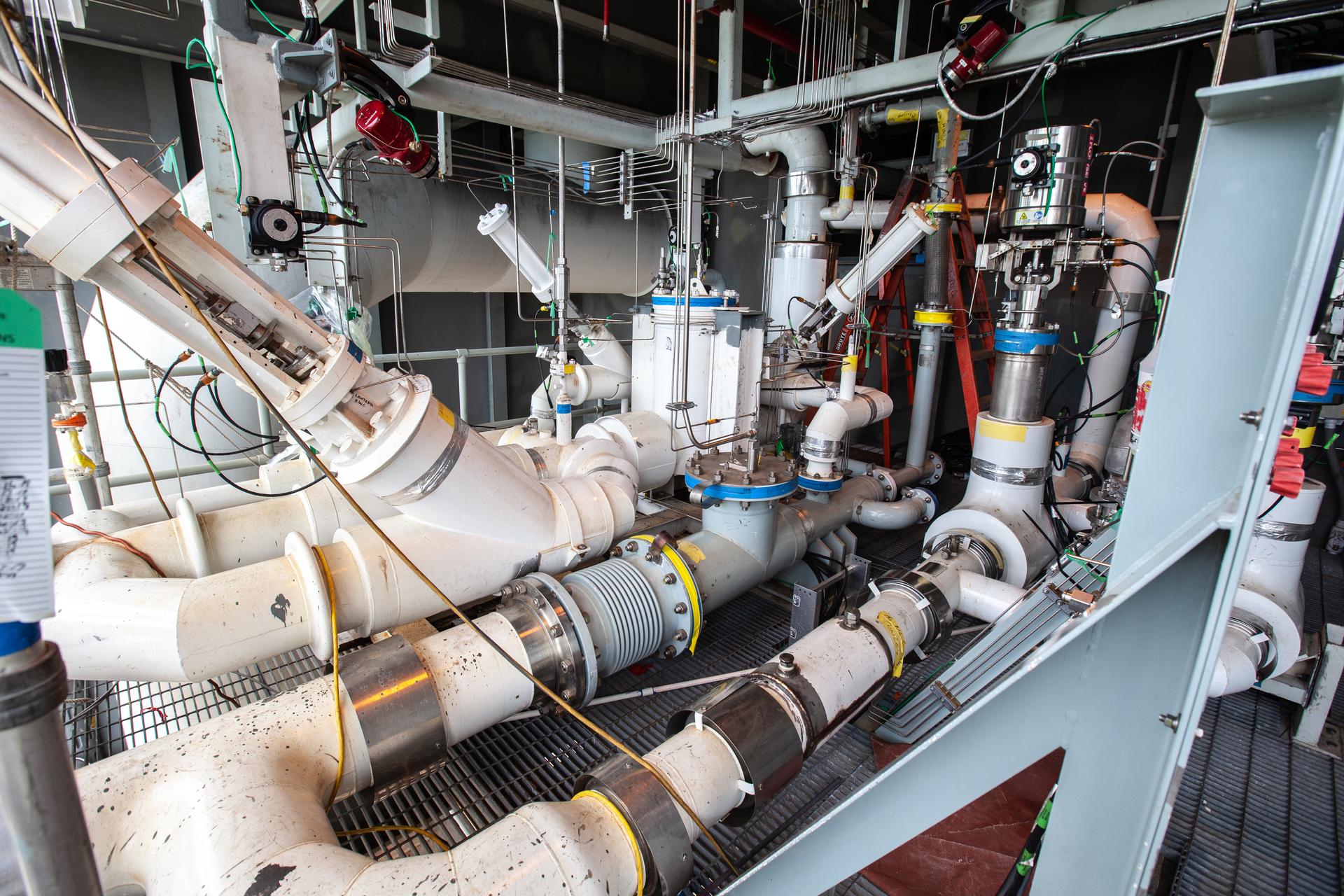
The fluids that launch rockets are the same fluids that run LNG plants, steel mills, and hospital gas farms: liquid oxygen at minus 297, liquid nitrogen at minus 320, liquefied methane at minus 260. Very few valves survive down there, a small club of manufacturers builds the ones that do, and the fastest-growing demand for them in the country is the aerospace buildout happening one state south of us.
What makes a valve cryogenic
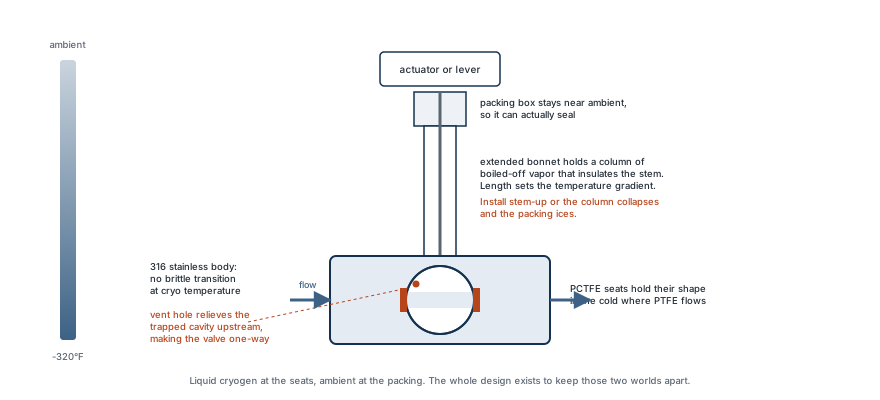
A cryogenic valve is a normal valve re-engineered around three problems. First, the stem seal: packing cannot seal at minus 300, so the valve gets an extended bonnet that holds a column of boiled-off vapor between the cold body and the packing, keeping the seal near ambient temperature. The extension has to be long enough, and the stem has to point up, or the vapor column collapses and the packing ices. Second, trapped liquid: a closed ball valve traps cryogen in its body cavity, and liquid warming to gas expands on the order of six hundred to one, enough to burst the valve. The fix is a relief hole in the upstream side of the ball, which makes the valve one-directional. Install it backwards and it will not seal, which is why the flow arrow on a cryo valve is load-bearing. Third, materials: PCTFE seats instead of PTFE, which cold-flows, graphite-family packing where fire safety demands it, and austenitic stainless bodies, because 316 stainless has no brittle transition on the way down while carbon steel shatters. The governing specs are MSS SP-134 for the design, BS 6364 and ISO 28921 for cold testing in a liquid nitrogen bath, and API 607 fire-safe on hydrocarbon service.
We supply extended-bonnet cryogenic ball valves in stainless with PCTFE seats and vented balls, from quarter-inch instrument sizes through large flanged and trunnion designs, plus cryogenic butterfly valves with LOX-compatible trim. Just as important, we stock the cryogenic repair kits, seats, seals, and packing sets, because a cryo valve's real failure mode is seat leakage after thermal cycling, and the operators who run these systems reorder kits from us year after year.
Oxygen changes everything
Oxygen service adds a second discipline on top of the cryogenic one. In oxygen-enriched atmospheres the energy needed to start a fire drops dramatically, and a trace of oil or grease inside a valve becomes kindling. The governing practices are CGA G-4.1 and ASTM G93: certified cleaning, inspection, bagging, and tagging. Cryo clean and oxygen clean are not the same thing, and a LOX valve needs both.
We have supplied control valve assemblies for oxygen service, mounted and calibrated, built to the customer's oxygen-cleaning requirements. We know what changes when the medium is O2, and we quote it that way, including who certifies the cleaning and how the paperwork reads.

Where the applications live
Launch pads and test stands are cryogenic plumbing projects: propellant farms and loading trains for liquid oxygen and methane, chilldown and recirculation loops, and high-pressure nitrogen and helium press systems running thousands of psi through Class 4500 hardware. Air separation plants bury long-stem valves inside insulated cold boxes where a failure means excavating perlite, so reliability specs are brutal. LNG peak-shaving and bunkering plants, including three run by Georgia's gas utility, cycle valves from ambient to minus 260 and back. And under all the exotic work sits the most distributor-realistic layer in cryogenics: the bulk storage tank and vaporizer train behind every industrial plant, hospital, and food freezer, with its isolation valves, pressure-building circuits, thermal reliefs on every trappable segment, and the frost patch on a stem that tells you a valve is leaking. Research facilities round it out, running small quantities at flight-grade rigor that big manufacturers deprioritize.
We work this whole ladder today. LNG facilities in Georgia and Florida run our extended-bonnet cryogenic ball valves, our automated cryo assemblies, and our repair kits. We built and shipped an 8 inch cryogenic ball valve package for LNG service, valve, pneumatic actuator, solenoid, limit switch, stainless bracket, mounted and tested on our bench. On the extreme end, a university combustion research lab took delivery of our 4500 class high-pressure ball valves, an invoiced job, and a U.S. national laboratory's neutron source site has ordered our high-performance valve and digital positioner packages. When the spec is severe and the quantity is small, we are the shop that still answers.
The market is moving south of us
Florida's Space Coast set a record with over a hundred orbital launches in 2025, and billions of dollars of new pads, integration facilities, and test infrastructure are under construction right now. Every one of those projects needs the same things the LNG world already buys: cryogenic valves with the right bonnets and vents, oxygen-clean documentation, high-pressure gas hardware, and a supplier who answers fast when the qualified-manufacturer pool quotes lead times in seasons. Major cryogenic equipment routinely runs a year or more out, so a distributor who holds stock and has direct factory relationships is selling time, not just hardware. Send us the service conditions before you assume nobody will quote it.
Applications
Products for Aerospace & Cryogenics
Alloy Valves and Controls
Flo-Tite
Maxseal
Hy-Lok
Moniteur Devices
VRC (Valvtechnologies)
Need Valves for Aerospace & Cryogenics?
FTS has been supplying Georgia's aerospace & cryogenics industry for over 25 years. Tell us about your application and we'll recommend the right products.
Request a Quote